
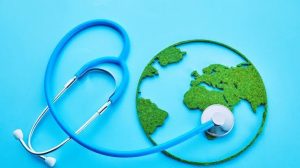
Protecting Public Health through Sanitation, Safe Environments, Climate Resilience, and Environmental Safety
📌 Overview
Environmental health factors account for nearly 12 million deaths worldwide each year. From air pollution and water contamination to hazardous chemical exposure and climate-driven health emergencies, environmental factors directly impact individual and population health.
As the pioneer training center for Environmental Health in the region, the Department of Environmental Health at Hossana Health Sciences College (HHSC) is dedicated to educating qualified professionals who design, monitor, and enforce interventions that build healthier ecosystems and safeguard communities.
🎯 Mission & Vision
Mission: Producing ethically grounded, highly competent, and competitive Environmental Health professionals while delivering impactful community solutions through evidence-based research.
Vision: Aspiring to be a recognized center of excellence in environmental health education, research, community engagement, and field practice.
🎓 Programs Offered
Level IV Diploma in Environmental Health (Environmental Health Technician)
💡 Core Competencies & What Students Learn
Our curriculum equips students to identify, assess, and control environmental factors that influence human health, focusing on:
Water Safety & Quality Control: Testing drinking water sources, managing water treatment processes, and preventing waterborne disease transmission.
Sanitation & Hygiene Promotion: Implementing community sanitation, waste management systems, and hygiene education campaigns.
Occupational Health & Workplace Safety: Monitoring industrial hygiene, evaluating physical/chemical hazards, and ensuring safe working environments.
Food & Chemical Safety Inspection: Overseeing hygienic food handling, safe agricultural chemical use, and food enterprise inspection.
Vector & Pest Control: Managing environmental interventions to control vector-borne diseases such as malaria.
Environmental Impact Assessment (EIA) & Climate Resilience: Studying the impacts of urbanization, air pollution, radiation, and climate change on public health.
🔬 Practical & Field Training
Environmental Health & Chemistry Laboratories: Practicing water quality analysis, air monitoring, and microbial testing.
Community Field Attachments & Sanitary Inspection: Conducting real-world health inspections in food establishments, industrial plants, schools, and health facilities.
Woreda & Municipal Health Internships: Working alongside local environmental health officers to execute community-wide sanitation programs.
💼 Career Opportunities & Graduate Prospects
Graduates of the Department of Environmental Health are essential across both public and private sectors:
Woreda & Municipal Health Offices: Serving as Environmental Health Officers and Sanitary Inspectors.
Public & Private Hospitals / Health Centers: Managing healthcare waste, infection control, and facility sanitation.
Water & Energy Resources Agencies: Conducting water safety audits and environmental monitoring.
Industrial & Corporate Sectors: Serving as Occupational Health and Safety (OHS) Officers in manufacturing and agriculture.
Non-Governmental Organizations (NGOs): Leading Water, Sanitation, and Hygiene (WASH) and disaster relief programs.
Academic & Research Institutions: Conducting environmental risk assessments and community health studies
Warm Regards,
Mr. Andualem Girma(MSc)
Head, Pharmacy Department